Stop Building A Brand.
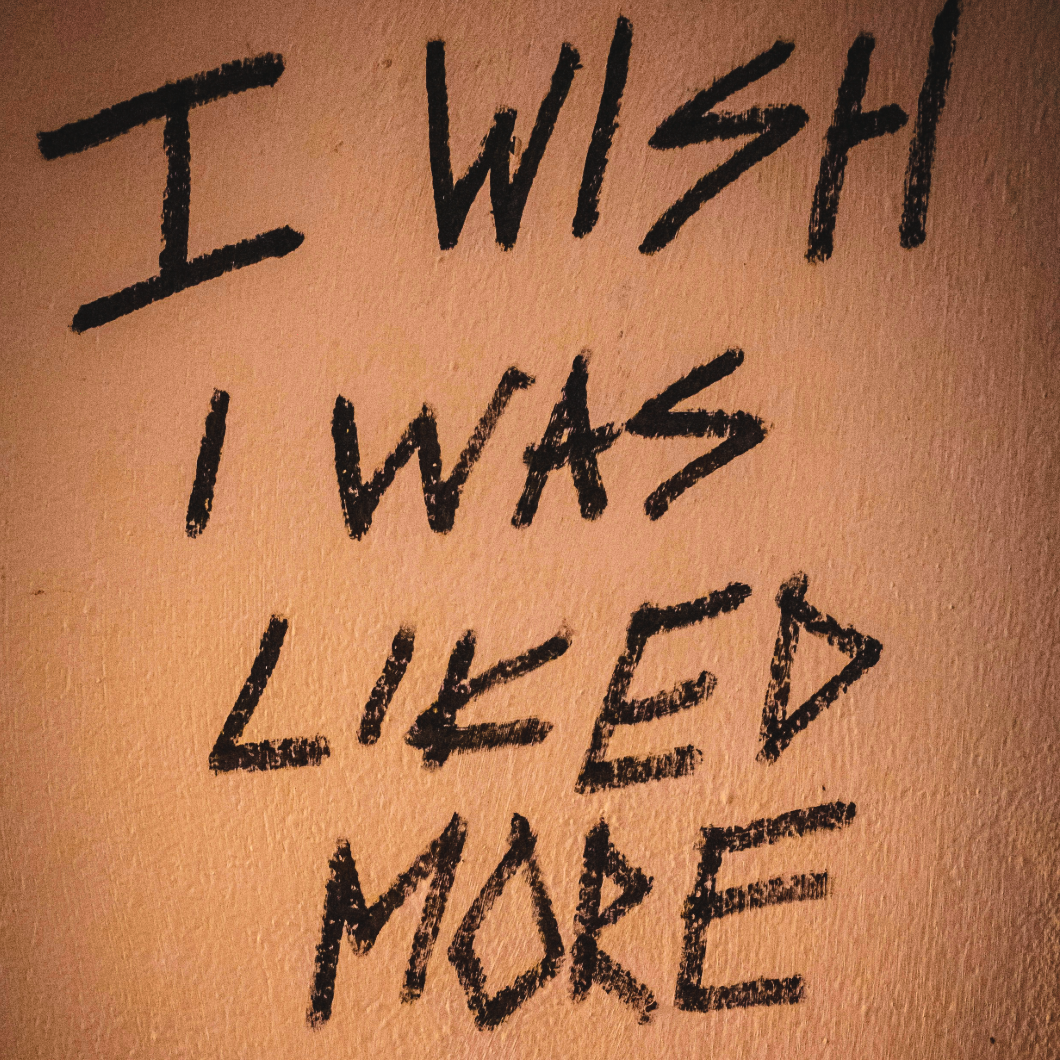
Photo by Josef Stepanek on Unsplash
Founder brand building can create the appearance of maturity before the business has earned trust.
Your mind toiled for days, weeks, months—hell, maybe years—on…
The Product.
The Thing.
The Business.
Often, The Big Idea lived at the fringes, on the blurry periphery of your mind. It was there, but not yet available. Present, but not fully formed. You could sense its shadow, its pressure, its presence before you could ever explain it.
And then—
It arrived.
A moment of strange, almost divine energy seized the mind and body. The thing that had been floating in the ethers finally materialized. Not as vague ambition or as moody vibes. Not as, “Someday I Will Make This…”
But:
The Product.
The Thing.
And now—
The Business.
And The Business suddenly needed an identity.
So the laptop opened, and the screen became a dozen browser tabs of:
CanvaAdobeChatGPTClaudeSquarespaceWebflow…
Forty-five minutes later, there is a folder devoted to the embodied aesthetics of The Business:
The logo. The typography. The website. The founder’s origin story. The values, the promise!
All of it precisely positioned.
Somewhere between these assets—between the visual system, the founder story, and the values arranged into careful public language—something unintentional happens:
A Brand arrives before The Business.
Branding is not the villainous pursuit. The Product, The Thing, cannot stay suspended inside the founder’s mind forever. At some point, it needs to be embodied. It needs a name, a mark, a shape, a way to formalize in the world.
But branding can distort The Business at this sequence of building.
It can confer an illusory aesthetic of maturity, levity, and established foundation onto something still becoming itself. It can make the founder feel as if the company has crossed some invisible threshold into legitimacy because the logo, values, and website are all precisely attuned to the prevailing culture and market.
For the burgeoning founder, this can create an almost delusional excitement.
The Brand appears as The Business is still becoming.
The Brands Being Imitated Did Not Start That Way
The brands many founders admire—BMW, Apple, Louis Vuitton—did not arrive fully formed.
There was no perfected typography, cultural authority, iconic product language, or founder myth already prepared for the YouTube treatment. These companies became what they are through decades of craft, mistakes, product decisions, market shifts, leadership ruptures, strange compromises, and long lean years that would have looked nothing like inevitability in their present time.
Young founders often look at these companies and see the finished, bright halo: the logo, the restraint, the cultural weight, the sense that the whole thing has always known exactly what it was.
But legacy brands are not powerful because they look like legacy brands. Those logos gained their aura through long, tedious periods of accumulated internal work: trust, process, people, judgment, repetition, and the shared transfer of values and craft.
The halo was not designed first.
It accumulated.
The Isetta Years
In the 1950s, BMW was not glowing with brand inevitability.
It was in a troublesome operational state. Not the elegant, retrospective kind of trouble companies later describe as a “period of strategic transition.” Nope. This was one of those precipice-of-disaster junctures where identity, aspiration, and market reality were all fracturing at once.
BMW’s new luxury cars—the fleet it had predicated its future on—were too expensive for a weary postwar market. The company found itself expensively misaligned with reality. Its future identity, the one of beautifully engineered precision, had yet to be formed.
What helped keep BMW alive was not some sleek, fast model navigating the streets of Munich, but a hideously strange bubble car.
The BMW Isetta was small, awkward, and almost surreal in its separation from the later mythology of German performance engineering. It had a front-opening door, a motorcycle engine, and very little relationship to the aura people now associate with BMW. Produced by BMW from 1955 to 1962, more than 160,000 were built.
It was not the dream product.
It was the survival product.
And that is why its story has relevance.
The Isetta did not express the future brand. It bought the company time to build the future business. It was awkward, necessary, humbling, and useful…
Meaning, it belonged to the real history of the company rather than the bright-shiny mythology.
The ultimate driving machine was funded by the ultimate compromise.
That is how real businesses often work. They pass through periods that do not match the future story. They do things that are necessary before they do things that are iconic. They survive through work that may not photograph well, may not fit the dream, may not belong in the founder’s preferred mythology.
But those years matter.
The Isetta years are not a detour from the story…
They are the story.
Every durable business has some version of them: the quiet years, the awkward years, the years when the work does not yet resemble the dream. Those years build something branding cannot manufacture: humility, judgment, and the institutional knowledge of what it actually costs to survive.
The Trunk Maker Had to Become Fashion
Louis Vuitton is now a symbol of sophisticated luxury, but heritage alone did not carry it into the present.
For much of its life, the house belonged to an older world of travel: steamer trunks, rail journeys, ocean liners, fitted cases, and the ceremony of refined transatlantic movement. It was luxury, yes, but a specific kind of luxury: a luggage house tied to the rituals of a world that was slowly disappearing.
And the world did change.
Steamship luxury became memory. Travel became faster, less formal, less trunk-bound. Luxury and fashion became more secular as global economics prevailed. A heritage house could not simply polish the past and expect the future—one of vast cultural and economic upheaval—to abide by its traditions.
By the 1990s, Louis Vuitton’s entrenched traditions had rendered it something close to moribund. Culturally recognizable, yes. Still rich with inheritance. But increasingly tethered to a yester-year idea of luxury.
LV required reinvention.
In 1997, Marc Jacobs arrived as artistic director and, with his pure, innovative energy, advanced Louis Vuitton into modern-day fashion by creating the company’s first ready-to-wear collections and helping turn a heritage relic of the black-and-white photography era into an MTV-age global fashion force.
(Anyone reading this remember House of Style hosted by Cindy Crawford?)
Suddenly, the old French craftsman trunk maker had become…
Fashionable.
That did not erase the craft. It did not erase the trunks. It did not render the monogram, the travel mythology, or the accumulated aura of the name as a…
Sellout.
Though, yes, some surely thought so.
Instead, it reactivated them.
Today’s modern founder often sees only the present LV: the iconic monogram, the visual aura of permanence, the sophisticated luxury of an old name still moving through contemporary culture as if it were inevitable.
But Jacobs understood, or at least enacted, something young founders often miss: legacy is not preserved by aesthetic imitation. It is preserved by making the old codes, processes, people, and inherited craft alive enough to survive the next cultural moment.
That is very different from borrowing the look of heritage.
Louis Vuitton did not become modern by pretending to be new. It became modern by evolving its inherited gifts into a new form.
And that is harder because it requires judgment. It requires taste under personal and market pressure. It requires knowing what can be changed without severing those inherited energies and what must remain intact so The Thing does not lose its soul.
The founder lesson is not simply: create a foundation of craft.
It is also: do not become confused by inherited aura.
A brand can be old and still hollow. Beautiful and still inert. Recognizable and still drifting toward absolute, self-destructive irrelevance.
For the founder, the work must keep renewing the meaning of the business.
Otherwise, the logo risks becoming an artifact.
Apple Without the Myth Fog
Apple may be the most dangerous example because its allure is so goddamn….dangerous.
The Minimalism. The Clean White Space. The BMW-like meticulous engineering. The Product Reveal! The Deity In The Black Turtleneck!
And beneath all of it, that otherworldly belief that technology could become intimate, desirable, and almost sacred.
But the mythology blurs the operational reality.
Apple did not become Apple because Steve Jobs had a personal brand. Apple became The Brand because, at its best, the company enforced product discipline with unusual intensity.
It simplified things. It cut away what did not belong. Jobs did not suffer from endless questioning, committee hesitation, or the soft organizational preference to keep every option alive just in case. He challenged. He decided. He said—
No.
And in the early-2000s language of every MFA workshop and creative department trying to sound transgressive about revision:
He killed his precious darlings.
Apple made decisions from a coherent, personal philosophy about how the object should feel, how the system should behave, and how much friction a person should have to tolerate before the thing became an insult to the person using it.
The mythology remembers the black turtleneck. Business history mythologizes the resurrection: the near-dead company, the comeback, the stock-chart miracle, the global behemoth.
The work underneath was more severe:
A restored standard.
Jobs’ return mattered not because the brand needed a mascot, but because the company needed a steward: someone to restore the ethos, force decisions, and make the business coherent again.
That is very different from building a personal brand.
That is stewardship. And stewardship is much harder to fake.
The Halo-Legacy Effect
Modern tools have made it possible to manufacture the appearance of legacy almost instantly.
Canva. AI. Adobe. Social Media. Prompted manifestos. Founder reels. Newsletter templates…
A litany of sales funnels.
A young company can now borrow the visual and emotional codes of businesses that took generations to accumulate the meaning those codes now convey.
Of course, this is not without value.
A small company should not need an enormous budget to look legitimate. A solo founder should be able to present an idea clearly. A good business should not be trapped in the visual incoherence of a 1995 GeoCities fever dream simply because professional design is inaccessible.
But the same tools that make clarity effortless are also dangerously good at conjuring seductive illusions.
A young company can wear the look of rough-hewn heritage before it has earned a single scar. Disciplined before it has built discipline. Permanence before it has survived anything worth remembering.
This is the halo-legacy effect.
This is not always fraud. Often, it is the innocent, earnest exuberance of the fledgling founder seeking immediate market relevancy. The founder is not trying to deceive the world. They are trying to give The Business enough visible form to be taken seriously.
In today’s market jargon, this is often framed as aspirational…
Brand Building.
But this trajectory can become seductive and destructive.
The logo, the website, the iconography begin to mean more than the business itself.
The brand says excellence, premium, elevated.
But the processes and people have not been built for that foundational excellence.
The brand says client-centered.
But the client experience is inconsistent.
The Brand becomes a facade.
And, eventually, so does the business.
The Problem Is Sequence
An entire ecosystem of Business-Tech-Bro gospel proliferates:
Build The Brand!
Claim The Niche!
Own It Before Anyone Does!
And beneath these CrossFit mantras lies the same old permission structure:
Fake it until you make it.
But there is a tolerable version of this phrase—just barely…
Do Not Let Uncertainty Scare You.
Do not apologize for work you are still forming.
But that is not usually what founder culture means.
Instead:
Manufacture the appearance of authority before you have developed the judgment, discipline, and body of work that make authority real.
Build the facade.
And hope—God, hope—that something real is taking shape behind it.
For a while, this can work.
The founder gets the audience. The language. The aesthetic. The momentum…
That gratifying sensation that The Business has entered the world already wearing its future inheritance.
But this sensation can be mistaken for success.
The Facade becomes The Business.
The Emperor With No Clothes, but with a cleaner logo, better typography, and a landing page optimized for conversion.
What Foundation Actually Looks Like
So what does foundation look like?
Not the checklist, framework, or five-pillar pyramid of operational excellence that appears in a slide deck with all those fanciful icons and is immediately, expensively banished to some shared folder.
Nope.
Foundation is the lived structure underneath The Business: the essence, the ethos beneath the logo, the website, the founder’s public language, and the polished promise of what The Business claims to be.
It begins with fidelity to the original impulse.
Every real business starts with some animating force: a problem felt so acutely it would not leave the mind; a standard so low, so obviously neglected, that someone with taste and conviction felt compelled to raise it; a capability developed over time until it finally cohered into an offer worth making.
The Product. The Thing. The Business.
Before the logo, the values page, the carefully phrased public identity, there was…conviction.
The question is whether The Business still resembles that original impulse once the world gets its hands on it.
Six months in. Two years in. Five years in. After the market has had its say. After clients have questioned, shredded, and mocked its convictions. After opportunities have tempted it to become more scalable, more familiar, more palatable, more legible, and slightly less…
Itself.
Is that original essence, that ethos, still…
Authentic?
Not the client-facing, SEO-friendly mission statement.
The deeper, inscrutable Thing.
The conviction the founder held before the market applauded it. The standard still alive in the processes and people. The part of The Business that remains intact after competitors copy it, reformulate it, make it fashionable, and sell a cheaper version with cooler, hipper aesthetics.
That fidelity is bedrock.
When it erodes, The Brand is hollow.
Foundation also requires the ability to survive fallow time: the years nobody wants retold in the origin story. Slow clients. Limited recognition. Uncertain demand. The Tuesday afternoon when nothing is happening and The Brand, with all its polished language and beautiful aesthetics, suddenly feels louder than The Business behind it.
That gap is uncomfortable.
Some founders use those years to deepen the work. They study the clients they actually have, not the imaginary clients in the positioning document. They improve the process, clarify the standard, and become more honest about what The Business is and is not.
Others overanalyze. Decorate. Spray polish and perfume over the silence. Rebrand. Relaunch. Refresh the visuals. Increase the content.
Fallow time is not empty time. It is formation time. Used well, it becomes foundation. Avoided, it becomes performance.
And foundation must eventually transfer to people.
A founder may understand The Business intuitively. They may feel the work in their brain, bones, and marrow. But a growing business cannot remain trapped inside the founder’s private intuition forever.
It has to transfer into people, process, decisions, and the way work is done when the founder is not in the room.
This is where many brands begin to stagnate.
Standards become slogans. Judgment turns to jargon. Compromise gets mistaken for profit.
A business whose people can repeat The Brand but cannot explain The Standard is not transmitting culture…
It is performing culture.
And clients will feel the gap before leadership names it.
The Client Is the Proof
The Brand can symbolize anything.
The client experience sees through the illusions of The Brand and stares at its truth.
Not the carousel of testimonials on the front page. Not the downloadable case studies. Not the retrospective founder video where someone stares into the camera and admits, with careful humility, that past failures and grievances have led to wisdom.
Nah.
The actual, damn client experience.
After the work is done, does the client feel that something real happened? That judgment entered the room? That the company was inside the problem with them, not hovering at some professional distance with a process and a pleasant, price-inflated invoice?
Did the care become visible through decisions? Did the work hold?
This remains the oldest form of brand-building and still, somehow, the least embarrassing.
Do the work well. Make people feel the difference. Let the memory travel.
That’s it.
It will not generate endless content. It will not flatter the algorithm. It will not give the founder the instant chemical reward of visibility.
But it compounds in a way manufactured presence rarely does.
A client may forget the tagline, but they will not forget whether The Business was actually with them.
The Soul Question
Every growing business eventually meets the soul question.
It rarely arrives with cinematic tension or Succession-style boardroom betrayal.
Usually, it arrives as a reasonable opportunity:
A bigger client. A partnership. An infusion of private capital that makes resistance feel…well, just so damn silly. I mean, who turns down all that goddamn money?
This is the threshold—Current 8 in NorthBreak’s Lens:
Can You Grow Without Losing Soul?
Can The Business grow if it becomes slightly…different?
Can the bigger client, the partnership, the influx of cash sustain that original essence and ethos?
Will it strengthen the organic foundation—the principles, processes, and people? Or will it disrupt them?
Will The Business become more durable? Or merely more palatable? More optimized? More recognizable?
Just…
A Brand?
And the founder knows.
Maybe not immediately.
Sometimes this realization arrives late, after the decision has already been absorbed by the processes and people. The numbers are burgeoning. The clients are giddy beyond belief. The venture capital guys have gotten their return.
Oh, and The Brand?
It’s now…
Iconic.
But something essential has shifted.
That is the soul question:
Is this still The Thing?
Does this still resemble the original impulse?
Is The Business becoming more fully itself, or more efficiently performing the version of itself the market prefers?
This is not a purity test. Businesses adapt. Markets change. Founders mature. Offers evolve. The original impulse should not become a shrine nobody is allowed to touch.
But adaptation and drift are not the same thing.
And a founder has to know the difference.
Build the Foundation
Build The Damn Brand. Give The Business a name, a symbol, a-whatever.
Make it the most beautiful thing in the world.
But do not worship the thing that arrives before the proof.
Build it in the right order: judgment, a body of work and those all important client relationships that generate trust before they just bland testimonials on a webiste.
Build the standards that hold when shortcuts are available and no one would notice the difference except you. Build the people who understand why, not just what. Survive the fallow years without abandoning the work for the cheap little piles of cash and applause.
Let The Brand emerge from foundation. Not aspiration alone.
BMW had its bubble car. Louis Vuitton had its trunks, and then had to make those trunks speak to another century. Apple had to recover its standard from the fog of its own Ridley Scott directed mythology.
None of them began with aura and none of them survived on aura alone.
They became meaningful because the foundation became meaningful first.
The aura came last.
Build The Foundation until The Brand has no choice but to become obvious.
The strongest brands are not facades. They are evidence of craft maintained under stress, of standards held when shortcuts were available, of judgment developed through difficulty and applied over time.
The logo should not sparkle with meaning before the business has earned it.
The website should not speak with more conviction than the people.
And you, the founder?
You should not become more important than the work.
Build The Foundation.
Let The Brand follow.
Can you grow without losing soul?
If The Brand has started moving faster than The Business, NorthBreak helps founders examine what still holds: the ethos, people, process, judgment, creativity and standards beneath the public image.