The Founder's Work Is Creative Work
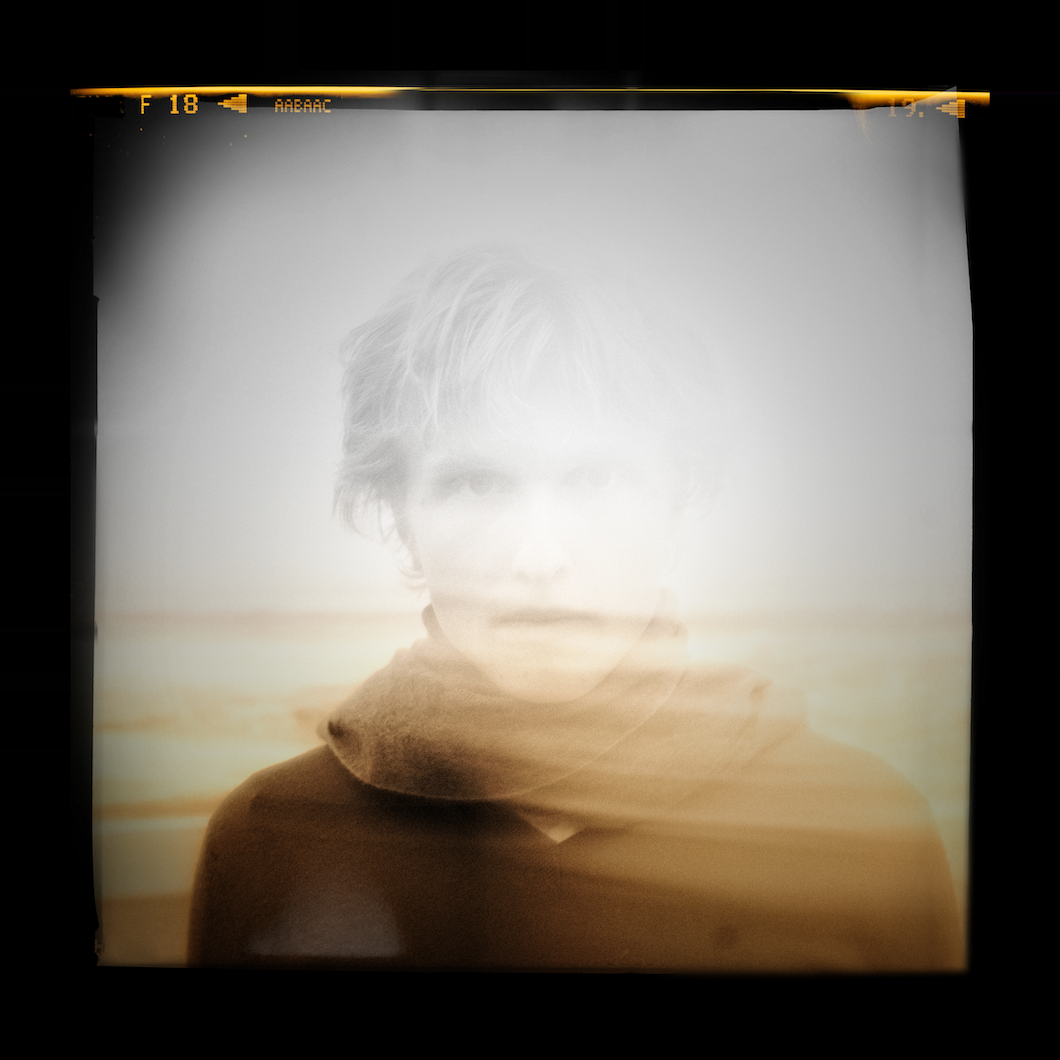
Building a business is creative work before it is operational work. The founder’s task is to shape what does not exist yet.
Most founders don't think of themselves as creative.
Some look at a job that's been done wrong for years and know, almost instinctively, that there's a better way to do it.
Others see a market vacuum, competitors who've stagnated.
Still others see engineering. Problem-solving. A scientific, mathematical pursuit.
But engineering has more in common with writing than most admit.
Code gets drafted, tested and reworked…
Cut apart. Rewritten.
The elegant solution gets cut. The clever part wiped.
And…
Yes, all the little darlings are sacrificed.
A solution that looks elegant on the screen fails the moment it meets reality. One small change breaks something three layers away. Hours disappear into a problem that refuses to resolve until suddenly, maddeningly, the structure becomes…
Obvious.
That is creative work.
Not because code is art in some poetic, cigarette-smoke romantic sense…
Because the process is familiar: revision, frustration, judgment, restraint, and the willingness to stay with something that does not yet work.
Then the builder becomes a founder, and suddenly the product isn't the only thing being designed…
What gets added?
What gets removed?
What needs structure?
What has become unnecessary?
The medium changed.
The work did not.
They are building something that did not exist before.
Not assembling.
Not optimizing…
And because they don't recognize it as creative work, they don't treat it like creative work.
The early stage of any business feels different…
Invigorating.
There's inspiration and movement without structure. Decisions are inspired. Instinct has more power than process. It's fun and messy; a relational kind of work that blends leading and fixing.
Most founders don't have words for that phase. So they run through it without naming what it is, or recognizing its limits.
And then, as the business stabilizes, the instinct starts getting smothered with clearer structures and roles.
Sometimes it's external pressure: investors want systems, partners want defined processes, the team just wants to know what they're actually building.
Sometimes it's internal doubt…
What felt obvious at $500K feels reckless at $2M. What worked with five people feels chaotic with fifteen.
The founder starts to believe the way they've been operating—instinctive, adaptive, inspired—won't scale.
Because that's…amateur.
"A real business doesn't work this way."
So someone in a suit shows up to provide what investors call "adult supervision" — and with them, the dreaded Framework. Built to make things more…predictable.
Sometimes predictability in processes and people is necessary. But something else happens at the same time:
They start distancing themselves from the very way of operating that made the business possible. Decisions that once felt obvious now need justifying. Ideas that used to arrive fully formed get workshopped into mediocrity. The business that once moved like an extension of instinct now moves like a Committee.
The instinct that once guided decisions becomes something they try to validate. What feels right gets replaced by what looks correct. The ability to shape something under uncertainty gets traded for the safety of known models.
The work gets more…organized.
But less…alive.
Boring.
Meetings that used to generate ideas now generate reports on…ideas.
Decisions that once happened in conversation now need decks…and more decks.
The founder who used to shape the product directly now reviews what others shaped. The speed's still there—maybe faster—but the feel is…different.
What used to be responsive becomes reactive. What used to be exploration becomes execution.
The business moves. But it no longer discovers.
A founder who once moved fast now hesitates: pausing more, waiting for inspiration.
A business that once felt distinct starts blending in, looking like everyone else in its category.
Decisions follow a logic that makes sense to investors but not necessarily to the founder.
Slowly, tension builds. Something unconscious. Something the founder can't pronounce.
Momentum sputters…
But nothing is obviously broken.
The numbers are still good…
But something's off.
Not because something failed. Because something got traded, a long time ago, and nobody noticed the exchange.
Some founders never made that trade. Not because they resisted structure, but because they knew, even without saying it, that what they were doing was never just operational. They came from places where creation was normal: music, design, writing. Building.
They learned early: you don't just follow a method…
You develop taste. You iterate without knowing the endpoint. You make judgment calls no spreadsheet can articulate.
They learned structure exists to support the work, not define it. That discipline and improvisation aren't opposites.
So when they build a business, they don't abandon those instincts…
They apply them.
A painting contractor who started in sound engineering doesn't just manage crews and bids. He treats the business the way he once treated album production: attention to detail, aesthetic judgment, collaboration with other creatives. The same is true of technical founders who also happen to be musicians, artists, photographers, or writers. They may separate those parts of themselves by category, but the habits of making are deeper than just simple categories.
The medium changes, but the instinct to shape, revise, and make something coherent usually doesn't.
The business isn't a departure from that work.
It's a continuation of it.
A business is not a system first. It's a creation that eventually needs structure.
When founders reverse that order—when they treat the business as a system first—they start managing something they no longer fully understand. They lean more on what can be measured and less on what can be felt.
They bring in processes to stabilize the work. But in doing so, they smother the very qualities that made the work glow in the first place. And over time, the gap widens between what the business produces and what the founder actually envisioned.
The problem was never that structure got introduced…
The problem is the work got misidentified.
Creative work without discipline becomes chaos. Business without recognizing its creative nature becomes rigid.
The founder's job is to hold both. To build something structured enough to function and open enough to evolve. To stay grounded in what's real without losing the ability to see what isn't there yet.
That's not a business skill…
It's a creative one.
The question isn't:
"How do I run this better?"
It's:
"What am I actually building?"
Because once that's clear, you don't just manage it…
You shape it.
And when you shape it, the work changes.
Structure becomes something you design, not something you adopt. Decisions become expressions, not just responses. The business stops feeling like something you operate and starts feeling like something you make.
Once you treat the business as creative work, you stop asking:
"What's the best practice?"
And you start asking:
"What does this need to be?"
You stop recruiting for execution and start recruiting for judgment. The question shifts from,
"Can this person follow the system?"
To:
"Can this person help shape what the system becomes?"
The metrics don't disappear. Revenue and margins are still vital. But they become constraints you create inside, not the definition of what you're creating. Growth stops being the goal and becomes what it always should've been: one possible outcome of real creative alignment.
The business doesn't get less serious, it becomes more yours.
Founders navigating this shift can explore Working Together →