What We Cover Up
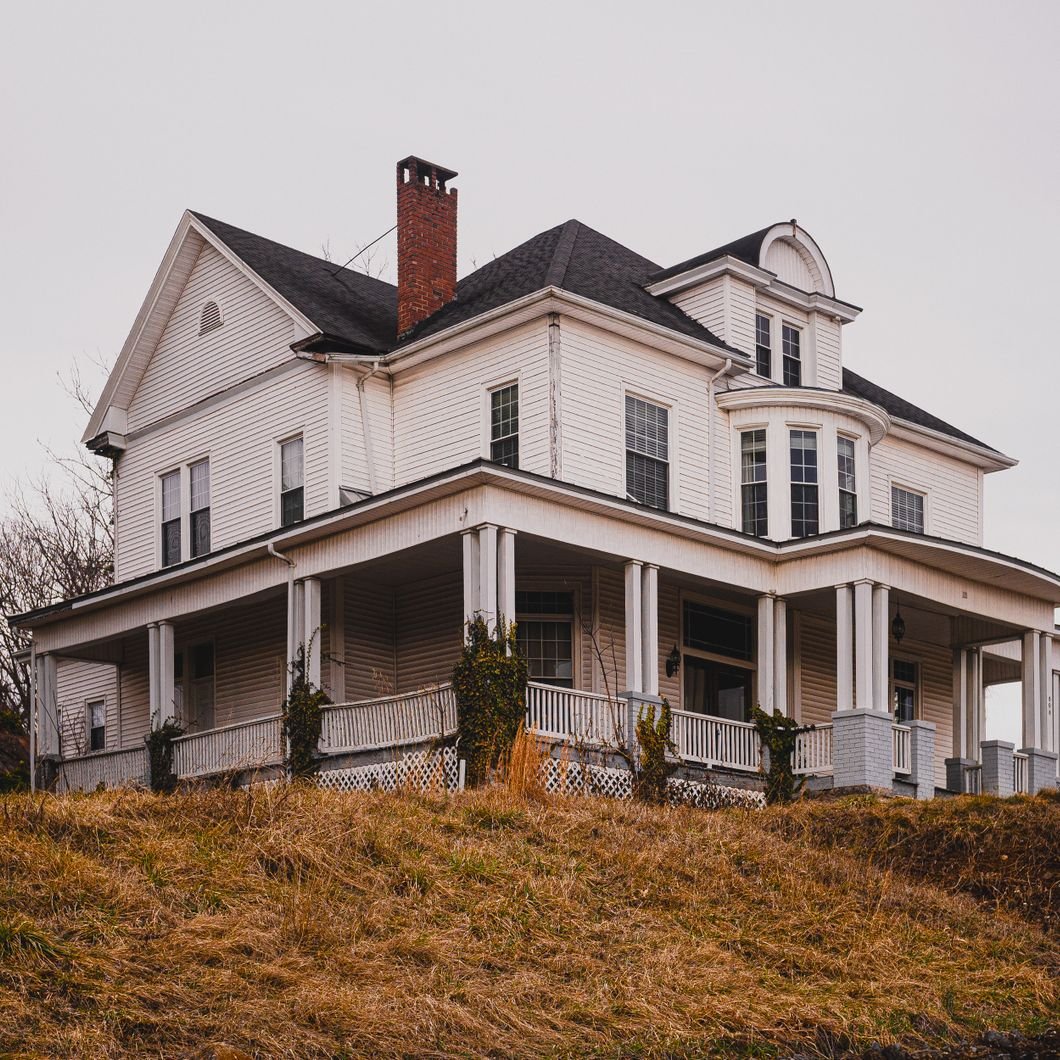
Photo by John Cheathem
What We Cover Up explores the surprising parallels between renovating an old house and restructuring a business. Through the accumulated decisions, hidden problems, and interconnected systems of a historic home, NorthBreak Advisors examines how founders and business owners approach organizational change, why seemingly simple fixes can create lasting complications, and how leadership decisions affect the people who must work within the structures they inherit. An essay on business operations, institutional knowledge, organizational responsibility, and the importance of understanding what exists before deciding what needs to change.
Many years ago, my wife and I purchased the storybook—or maybe even clichéd—Big Old House in the Stigmatized, Yet Soon-To-Be-Gentrified River Town.
Built in the late 1800s from multiple layers of brick, the home sprawls and rises across three floors, with a continuous spiral staircase. Doorways and windows have lovely, layered moulding. Cast-iron radiators—varying from simplistic to ornately designed—are positioned throughout the home.
From the brick sidewalk, the house appears to be the quintessential Stately Mansion. And beneath its architectural grandeur lies a certain…practical refinement.
When I'm outside, packs of wandering, picture-taking tourists will ask—
"Do you give tours?"
My response is always a smirking…
"No."
Because what I have yet to tell you, dear reader, is that…
Behind that Stately Mansion exterior is an interior that has endured decades of rather…questionable interpretations of home improvement:
Ancient floor tiling—even on the ceiling of a makeshift "bathroom"—heinous carpeting, 1970s fake-wood paneling (which reminds me of my childhood home, minus the accompanying green shag carpeting), bedrooms converted into—well, I gotta be honest—no fucking idea, and innumerable other oddities concealing its original hardwood flooring, plaster walls, wainscoting, and everything else.
It's not a full-on Norm Abram, 1980s-era This Old House reclamation project. But over the years, as I strip and chip away at decades of inexplicable, cheap home-decor quick fixes from the 1950s, '60s, '70s, '80s, and '90s, I think…
"Right now, somewhere in America, someone—instead of taking the effort to restore beautiful hardwood floors—is laying down mass-produced, synthetic luxury flooring so they can flip and exit their investment."
And then, like some haughty traditionalist, I shake my head and go back to stripping the third-floor bedroom of its 1950s, non-friable asbestos floor tiling.
Now, dear reader, you're thinking—
"How The Hell Does This Relate To A Business, Mr. NorthBreak Advisor?"
Well…
Right now, somewhere in America, a founder or business owner is doing precisely what the previous owners of my house did:
Something isn't quite working…
A process is showing its age…
A little crack has appeared in the organizational plaster…
Or perhaps something that has worked perfectly well for decades simply looks…
Dated.
And rather than investigate what's actually happening—question the underlying structure, examine the original reasoning, or understand why something was built that way in the first place—the owner decides it's time for a quick fix.
A cover-up.
An excuse to optimize.
Spruce It Up!
A new process! A new initiative! A new product! Perhaps a little organizational restructuring!
Something that makes the business appear…
Present. Innovative. Original.
A little…
Synthetic Luxury Flooring.
"Boom! Look At That, Everyone!"
Yet…
The crack in the plaster remains.
The original hardwood floor—with all its imperfections, history, and accumulated character—remains.
They've simply been…
Covered up.
And five weeks—or five years—later, someone is going to discover what's underneath.
Someone is going to have to…undo the mess.
At considerable expense.
Or, as I've learned, an extraordinary amount of sweat equity.
(Just like that small, mysterious roof leak I've been diagnosing for the last three months.)
What Happens When You Start Pulling Things Apart?
Something else I've learned from this old house:
You rarely discover just one problem.
You pull up a section of flooring, only to discover that what's underneath isn't what you expected.
You remove an inexplicable piece of paneling and uncover something installed by an owner who apparently possessed neither a level nor a discernible understanding of geometry or…electricity.
You begin what should be a simple repair, and suddenly you're investigating work performed fifty years ago by someone whose reasoning has been lost to a 1930s plumbing handbook.
And now…
You've got decisions.
Because whatever you've uncovered has a history.
And as you stare at that wondrously absurd remnant from fifty years ago…
You have no idea what the hell you're about to fix.
When I'm removing old, artificial hardwood paneling from a plaster wall, my initial reaction is…
"Who the hell thought this was a great idea? Why cover the original plaster walls!"
Then, as the paneling finally peels away, I'm left with decades of revealed decisions: glue marks, panel remnants, old paint, gouged plaster, handwritten scribbles…
At that moment, I want to utter even more volatile curses.
But…
"Maybe this was what they thought was the best solution for their place in life."
And—reluctantly, my heart agrees—perhaps it was.
No matter if it's a house or a business, we're often responding to the circumstances of our time:
Economic pressures. Cultural trends. Flawed decision-making. Practical compromises. The desire to modernize…
Or simply to make something more attractive for resale.
Not every decision was necessarily foolish or wrong.
But—
How often do we stop to question what we're actually changing?
What was here before? Why was it built this way? What worked? What didn't?
And…
What deserves to remain?
Instead, we look at something old, complicated, imperfect, or unfashionable and decide it needs to be…
Millennial Grey & White.
Nothing Exists In Isolation
One of the peculiarities of owning an old house is discovering that virtually nothing exists independently of something else. There's the plumbing. The electrical. That roof…with all its—roofs. Walls upon walls, accompanied by floors.
Somewhere, at some point, someone with a hammer, nail, pipe, or some other repair widget made a decision that another person would eventually have to contend with.
And because the house is still standing, the radiators still produce heat, and the lights still turn on, you assume…
Well…
It All Works!
Until something doesn't.
And then you begin discovering all the peculiar little accommodations, adjustments, compromises, and ingenious—or downright idiotic—solutions that have kept the place functioning.
Which…brings me back to your business.
That department you want to eliminate? That manager whose responsibilities seem utterly incomprehensible?
That peculiar process everyone insists has been done the same way for twenty years?
Before you start knocking down walls…
You might want to understand what's load-bearing.
How it's connected.
How the wiring and piping communicate.
How it all exchanges energy.
How it's all…
In our haste for change, order, correction, profit—owners and founders (and I did the same in my leadership days)—will often reach for the most apparent, accessible fix.
They will fastidiously, obsessively calculate and analyze The Numbers.
Delegate without understanding—or remembering—how The Process was assembled.
And once those decisions have been made…
Yikes!
Like a serpentine old knob-and-tube electrical system, haphazardly spliced and diced into modern wiring, the consequences begin revealing themselves.
And for owners and founders, those consequences can be…
Delegated.
Outsourced.
Call The Contractor! Call The Consultant!
And then, at some point, as they survey the mess…
"Yup. Time to flip this bad boy!"
The People Who Have To Live There
Here's the thing about flipping a house…
You don't have to live in it.
You can install new flooring. Paint the walls with some Walmart "Specialty Series." Replace a few outdated lighting fixtures to make the whole place look all so Realtor-staged and worthy of being…
Present. Innovative. Original.
Then…
Sell the damn thing.
Collect your return…
And move on.
But somebody eventually has to live there.
Somebody discovers that quiet leak. Somebody wonders why various electrical outlets are little, shall we say, unstable.
Somebody stands in the basement, stares up at the exposed floorboards, and thinks…
"Hey, that looks like original flooring!"
And rushes upstairs to pry up that synthetic luxury flooring.
That somebody has to contend with decisions made by someone who no longer has to live with them.
You know, like all the people inside your business.
The employees…
The managers…
The individuals who must navigate the processes, structures, systems, and decisions you've introduced.
They don't necessarily get to delegate the consequences.
They have to work inside them.
Every. Single. F'in Day.
And maybe your business needs a little more of those old, original hardwood floors.
Strong plaster walls—scuffs, divots, and all.
Something you built that still stands.
Something someone else can inherit. Build upon.
Not some Millennial Grey & White flip job.
Before You Start Tearing Things Apart…
Sometimes, understanding what you've built is the most important part of deciding what comes next.